 Skip to content
 Fabrics e-store
Sustainability Report 2025
Gruppo Sitip


Sustainability
Report
2025
Sitip Group


General
Disclosures
Letter to
Stakeholder
With the fifth edition of our Sustainability Report, we renew the SITIP Group’s
commitment to operating responsibly and transparently in a global context marked by profound geopolitical, environmental and social change. This document also reflects the second year of implementation of our Sustainability Strategic Plan and represents a further step forward along what is now a well-established path.
In light of the regulatory developments introduced by the Omnibus package, the Sustainability Report is currently a voluntary reporting instrument for the SITIP Group. We have firmly decided to continue publishing it, as this choice reflects a clear vision: sustainability is not an obligation, but an essential component of the way we do business. With this in mind, we continue to strengthen our commitment, translating it into tangible actions that are increasingly integrated across the Group. As a leading player in the high-quality synthetic fabrics sector, we recognise our responsibility to contribute to the transition of the technical textiles industry towards more sustainable models. This commitment is also reflected in the voluntary certifications obtained by the Group and in our participation in the United Nations Global Compact. Its Ten Principles guide our strategies and practices, reinforcing our focus on human rights, labour, the environment and business ethics throughout the value chain.
Within the framework of the Sustainability Strategic Plan, structured around the pillars of governance, environment, people and the value chain, 2025 was a year of consolidation. The Sustainability Committee continues to play a central role in overseeing this journey, contributing to the definition of
priorities and the progressive integration of ESG matters into the Group’s strategies.
In the environmental area, we continued to pursue greater energy efficiency, including through the expansion of Sitip S.p.A.’s photovoltaic system.
This initiative is complemented by the external procurement of 100% renewable electricity for both Sitip S.p.A. and Accoppiatura di Asolo S.p.A.
We also continue to invest in advanced technological solutions, such as the wastewater treatment plant equipped with a moving bed biofilm reactor (MBBR) system. At the same time, we further optimised chemicals management, achieving almost full coverage in accordance with the ZDHC and bluesign standards for the use of chemical products. In this context, research and development continues to be a strategic driver, focused on the development of sustainable products and the adoption of circular economy practices.
In parallel, we are continuing to strengthen our commitment to our people. In 2025, we introduced a structured performance appraisal system designed to recognise and develop skills, identify training needs and support professional growth. The organisational well-being programme, already implemented within the Parent Company, will also be extended to the subsidiaries in the near term.
At the same time, we continued to promote engagement across the supply chain. The Supplier Code of Conduct introduced by Sitip S.p.A. was also adopted by the other Group companies in 2025, helping to promote shared ESG standards throughout the value chain.
The journey undertaken in recent years confirms that integrating sustainability into our business model is a sound and firmly established choice. Continuing along this path means strengthening our ability to create lasting value for all stakeholders, while combining competitiveness with responsibility. We view this journey as an opportunity for continuous growth, guided by responsibility, innovation and consideration for our stakeholders. We therefore invite you to continue reading to learn more about our commitments and the results we have achieved.
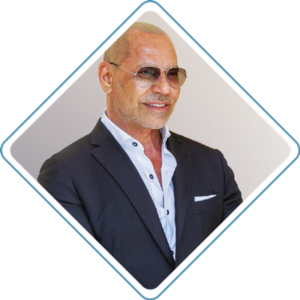
CEO
Giancarlo Pezzoli
Highlights
2025


Outstanding expertise
in a strategic sector
“
The deep love for our Work.
Our trust in man and his abilities.
The strength of our ideas and the courage to bring them to life.
The optimism that helps us to always give our best.Luigi Pezzoli
The main stages
of textile processing
Spinning
Sequence of operations required
to transform textile fibres
into yarn
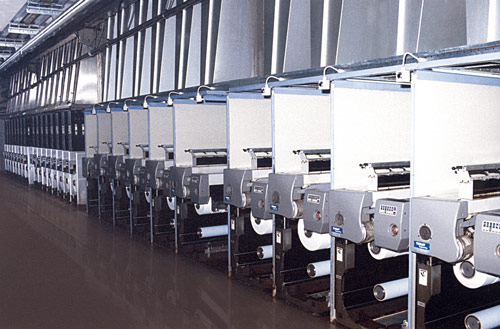


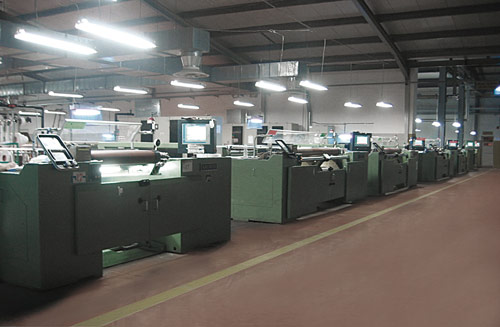
Warping
Arranging threads in parallel
(the warp) using a machine
called a warper
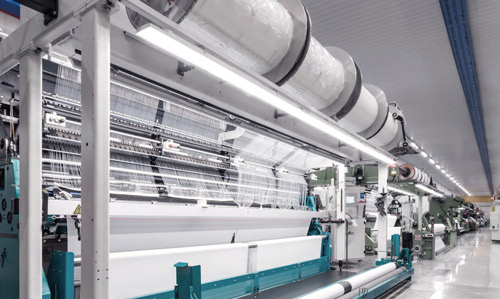
Warp-knitting
Transforming the warp into fabric by weaving it with a continuous thread (weft)
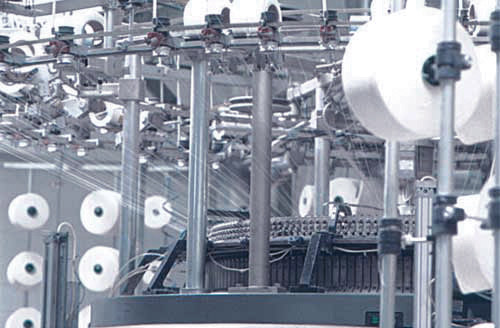
Circular knitting
Transforming the warp into fabric with a characteristic circular shape
Scouring
Preparing the raw textile for
dyeing and finishing
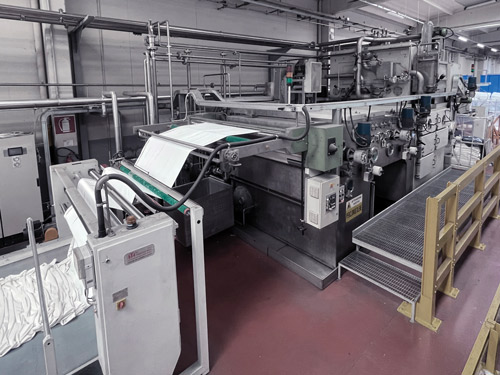
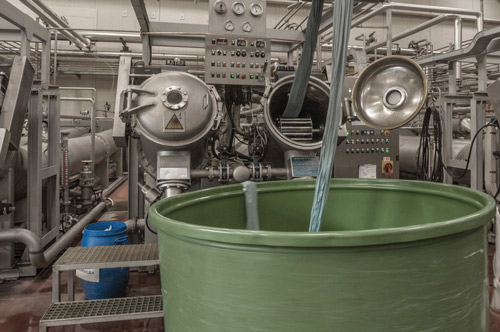
Overflow dyeing
Method where the fabric passes
continuously through the dye
bath
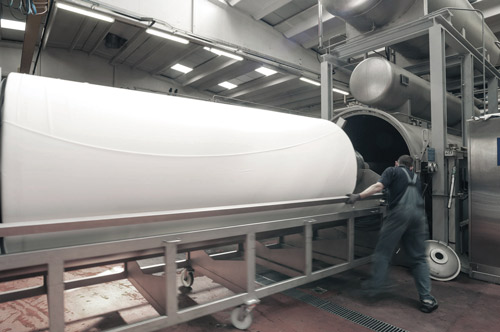
Beam dyeing
Method where the fabric remains
stationary while the dye bath
circulates
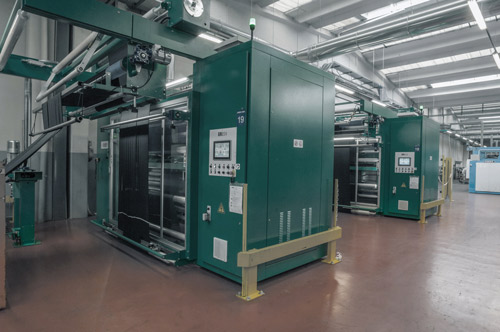
Brushing
Finishing operation that raises
the fabric to create a ‘napped’
effect
Shearing
Finishing process consisting
of cutting the fluff
on the finished pieces
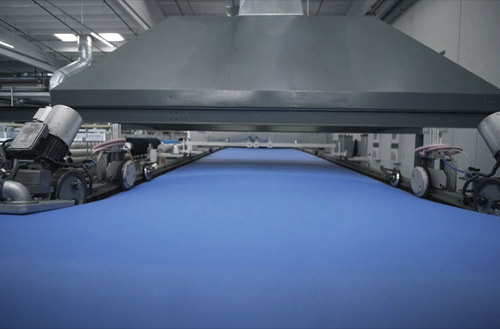
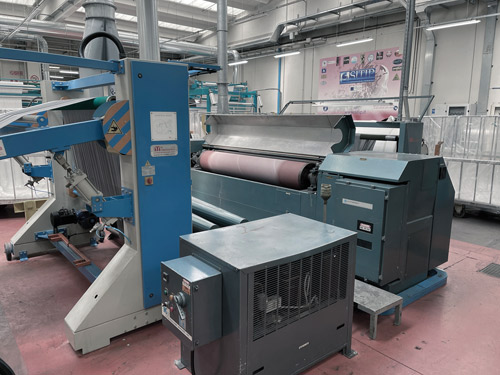
Emerizing
Finishing operation consisting of
sanding the surface to achieve a
peach-skin effect
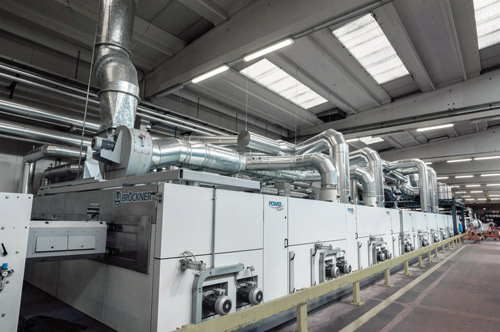
Stentering
Finishing treatments
to improve the characteristics
of a fabric
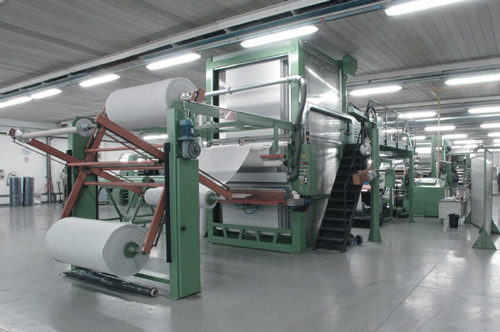
Flame lamination
Process that bonds a
synthetic-based foam with
various types of fabric
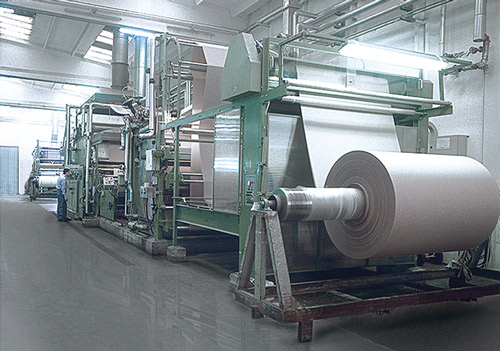
Glue lamination
Lamination by spreading glue
on one of the substrates
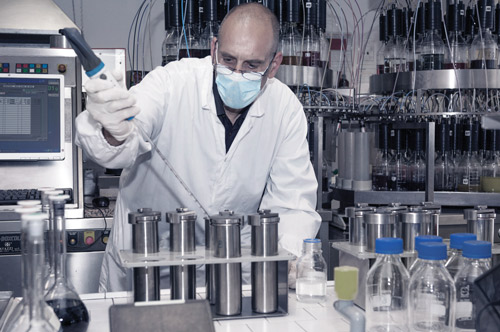
Laboratory testing
Set of checks on performance
and compliance with
requirements
Final inspection
and packaging
Quality control and packaging

Mission
We provide highly technical textile solutions for industry and apparel, designed to combine performance, safety and environmental responsibility. Our mission is to turn innovation into value for customers and communities, while reducing impacts throughout the entire product life cycle: from raw material selection and design to manufacturing processes, logistics and end-of-life management. Through a tailored service and advanced manufacturing flexibility, we pursue excellent quality standards at every stage, engaging the supply chain and all stakeholders in a process of continuous improvement.
Our values
Towards Ethics, Sustainability and Integration
Ethics in social and work contexts
We put people first. We promote a safe, inclusive and respectful working environment based on equal opportunities, continuous training and skills development at all levels. We foster ethical and transparent relationships both within the company and externally, in line with our Code of Conduct, which is inspired by the Ten Principles of the United Nations Global Compact. We apply fair remuneration policies, support well-being and work–life balance, and strengthen a culture in which safety is regarded as a non-negotiable value. Integrity and accountability guide every decision. We require both ourselves and our partners to meet high standards in relation to human rights, health and safety, anti-corruption and regulatory compliance.
Sustainability
We regard sustainability as a strategic driver of competitiveness. We operate according to a circularityoriented model based on reducing consumption and waste, selecting preferable materials (including recycled, recyclable and lower-impact materials), improving energy and water efficiency, preventing pollution and addressing products at end of life. We operate in line with the main international certifications and industry initiatives, strengthening traceability and compliance throughout the supply chain. The United Nations Sustainable Development Goals (SDGs) provide our frame of reference. We focus our efforts on the areas where we can generate the greatest positive impact, particularly climate, resource use, decent work, responsible innovation and partnerships. These commitments are supported by transparent reporting and comparable data, enabling us to measure progress and guide future decisions.
Tangible commitment:
• Measurement and continuous improvement: we monitor environmental and social performance through clear indicators and multi-year targets integrated into industrial planning.
• Responsible innovation: we invest in research and development to create high-performance, more sustainable products validated through recognised tests and standards.
• Supply chain and local communities: we work with suppliers that share our ESG criteria and contribute to the development of the areas in which we operate by creating skilled employment and supporting training and social initiatives.
Sitip's commitment to the most relevant SDGs in the industry

Integration
Deep vertical integration makes SITIP a distinctive player within the European market. The synergy between the Parent Company and its subsidiaries, Nylon Knitting and Accoppiatura di Asolo, enables us to oversee the entire value chain, from yarn production to finished fabric, including knitting, finishing and lamination processes. This model ensures full control over quality, lead times and traceability, facilitates the rapid adoption of product and process innovations, and enables the development of tailored solutions while reducing waste and inefficiencies throughout the production cycle. Thanks to qualified and flexible processes, we can respond promptly to the needs of the industrial and apparel markets, ensuring high standards, reliability and alignment with our sustainability objectives.
Business values and strategies towards sustainability
Group Stakeholders
The SITIP Group promotes a proactive, collaborative and respectful approach towards all its stakeholders, recognising dialogue and ongoing engagement as essential prerequisites for building solid and lasting socioeconomic success.
In order to understand, anticipate and, where possible, respond to the expectations and needs of its stakeholders, the SITIP Group periodically carries out a structured stakeholder engagement process.
The Group’s governance is based on the principles of integrity, transparency and fairness and plays a fundamental role in the company’s operating model, allowing the definition of clear rules on the implementation of strategic guidelines and the monitoring of ESG impacts, risks and opportunities.
Stakeholder

Shareholders
Suppliers and workers in the value chain
Employees and contract workers
Local community
Schools, universities, research organizations and similar organizations
Customers
Collaboration
with external organizations
in the field of sustainability
Confindustria Moda
Retex.green consortium
UN Global Compact
Carbon Neutrality of Alcantara S.p.A.
Group Certifications




Sustainability goals achieved
Environmental goals
• ISO 14001


• ISO 50001

• Development of a “New Life” product line comprising
exclusively recycled polyester or biopolymer fabrics
and raw materials.
Structural goals
• Wet electrostatic precipitators treating over 200,000 m3 of air per hour
Social goals
Esg self assessment platforms
• Registration on the ECOVADIS platform
Certification projects
in progress
SITIP and the ten principles of the Global Compact
SITIP has voluntarily adhered to the UN Global Compact, which sets out ten principles.

Human Rights
Principle I
Businesses should support and respect the protection of internationally proclaimed human rights
Principle II
They should make sure that they are not complicit in human rights abuses

Work
Principle III
Businesses should uphold the freedom of association and the effective recognition of the right to collective bargaining
Principle IV
They should eliminate all forms of forced and compulsory labour
Principle V
They should effectively abolish child labour
Principle VI
They should eliminate discrimination in respect of employment and occupation

Environment
Principle VII
Businesses should support a precautionary approach to environmental challenges
Principle VIII
They should undertake initiatives to promote greater environmental responsibility
Principle IX
They should encourage the development and diffusion of technologies that respect
the environment

Fighting Corruption
Principle X
Businesses should work against corruption in all its forms, including extortion and bribery
Social
Disclosures
SITIP Group people
“
Your work is going to fill a large part of your life, and the only way to be truly satisfied is to do what you believe is great work. And the only way to do great work is to love what you do. Steve Jobs

The following section describes how the SITIP Group interprets and applies the principles of the SA 8000 Standard
Compliance with the requirements of the SA 8000 standard is the result of a systematic and punctual commitment that the Group has been pursuing for several years, with the
aim of:
- promoting a culture of respect for the individual and for health and safety in the
workplace and environmental protection - eliminating the use of child labour
- eliminating all possible forms of discrimination, whether on the grounds of nationality or ethnicity, gender, religion, political or trade union membership, sexual orientation, disability, marital status or other
- promoting workers’ freedom of association and participation in trade union organisations and in collective bargaining
Group employees and collaborators by gender (2025)

Women
118 (20%)
Men
462 (80%)
In 2025, the SITIP Group had a total workforce of 580 employees and non-employee workers, down 2% on the previous year. Men accounted for 462 people, or 80% of the workforce. The gender distribution partly reflects the structural characteristics of the textile manufacturing and rubber and plastics industries. In particular, men are more strongly represented in production, technical and plant maintenance roles. This distribution is attributable to contextual factors, including:
• the historical segmentation of the labour market;
• the lower proportion of women pursuing technical and industrial education and training pathways.
It should be noted that the 2025 employee headcount does not include Asolo Invest, which has one employee, in line with the reporting scope applied in the 2023 and 2024 Sustainability Reports (see the Sustainability Report preparation criteria).
Employees and collaborators 2025 by geographic area

Italy
372 – 64%
Foreigner
208 – 36%
Health and safety
A health and safety management system is in place, covering all activities performed by employees and non-employees (contractors, transporters) as well as, more generally, visitors and anyone accessing the Group’s workplaces. In Italy the system complies with the legal provisions in force (Italian Legislative Decree 81/08): through the workers’ safety representatives (RLS/trade union representatives), employees participate in collaborative monitoring activities to identify possible risks, which can then be reported by the workers themselves.
Sitip S.p.A. has implemented a procedure for reporting both accidents and near misses, which also applies to external personnel and contractors operating on the company’s premises. The objective is to analyse every event and adopt corrective measures as part of a continuous improvement
approach. Nylon Knitting Ltd, the Group’s second-largest production site in terms of workforce, has also adopted a dedicated procedure for managing incidents involving employees, contractors, and visitors, so ensuring the necessary safeguards for risk mitigation and the implementation of corrective measures. As part of Accoppiatura di Asolo S.p.A.’s ISO 45001 certification process, expected to be completed in 2026/2027, the company will introduce a procedure allowing near misses to be formally reported.
The main safety documents
available to employees
Among others, employees have access to these documents which help implement and monitor safety:
Risk assessment and related improvement plans (given to the workers’ safety representative to be shared with the workforce);
Safety procedures with prevention and protection measures;
Safety data sheets of the hazardous substances and mixtures used in the performance of individual tasks;
Safety procedures relating to machinery and plant.
SITIP Group research strives to promote new products and applications in collaboration with customers and suppliers. A key component of product innovation is the focus on using yarns and raw materials with reduced or lower environmental impact. This research has led to the development of NATIVE Sustainable Textiles, a technology that is applied to fabrics made from recycled yarns and chemicals with a low environmental impact. The eco-friendly products are certified with OEKO-TEX® Standard 100, bluesign and GRS.

Transparency, traceability and end-user health and safety
Responsible supply chain management, and in particular, promotion of the transparency and traceability of raw materials along the entire supply chain, is a key issue for the Group. In line with the technical standards of the adopted certification schemes, suppliers are carefully selected in order to encourage and guarantee high product traceability. For example, GRS certification (held in Sitip S.p.A., Accoppiatura di Asolo S.p.A. and Nylon Knitting Ltd) guarantees that products are made with recycled materials, in accordance with environmental and social criteria applied in all stages of production, including the traceability of the raw materials used. For more detailed information, see chapter 3.4 Resource use and circular economy.
Operating in a B2B market (see section 2.4.1 A strategy that is all about quality), the Group safeguards the health and safety of end customers primarily through the guarantees provided by product certifications in accordance with specific international standards. These include OEKO-TEX® Standard 100 (Sitip S.p.A. and Nylon Knitting Ltd) and bluesign (Sitip S.p.A. only), covering the entire product life cycle, as well as traceability through ISO 9001 certification (Sitip S.p.A., Nylon Knitting Ltd and Accoppiatura di Asolo S.p.A.). More specifically, from the earliest stages of the production chain, Sitip takes great care to prefer the purchase of local or European raw materials, operating in full compliance with national and international regulations. During the procurement process, the Group also agrees with its suppliers on the requirements that raw materials must meet to comply with the specifications established by the standards and certifications adopted and held by the Group.
Even with corporate customers, the Group has taken and shared various actions to protect the health and safety of end-users, always fine-tuning the product features on the basis of quality criteria and safety policies. The actions have involved changes in the terms of purchase and production, which are defined in the operating procedures as part of the quality management system. The parent company Sitip S.p.A., in particular, adheres to the ZDHC programme, focusing on the principles of transparency and management of chemicals according to an integrated prevention and precaution approach. Furthermore, in accordance with bluesign certification guidelines, since July 2015 Sitip S.p.A. has ensured a responsible and sustainable production system for eliminating the use of harmful substances from the very beginning of the production process.
How certifications benefit the end user
In addition to enabling and supporting more efficient and sustainable processes, certifications are also a guarantee for the consumer. This is how.
OEKO-TEX® Standard 100
The OEKO-TEX® Standard 100 allows each certified product to carry the Confidence in textiles label, which guarantees the end user that the purchased product was manufactured using environmentally friendly processes and tested for harmful substances.
bluesign
The bluesign Approved label is awarded to components that are tested and produced in a sustainable manner. In order to apply the bluesign label, at least 90% of the fabric and 30% of the accessories must
be approved.
Programma ZDHC
The Zero Discharge of Hazardous Chemicals (ZDHC) programme is an initiative committed to achieving zero discharge of hazardous chemicals in the textile, leather and footwear value chain to ensure the health and safety of the end user.
Environmental
Disclosures
Climate change mitigation strategy and policy
A modern approach
to climate change mitigation
Aware of the energy-intensive nature of its operations, particularly those of Sitip S.p.A. and Nylon Knitting Ltd, the SITIP Group recognises the importance of energy efficiency. The production processes—including spinning, warping, weaving, dyeing, finishing and lamination—require high levels of energy consumption to ensure consistently high quality standards. Both companies are certified to ISO 50001. The updated Integrated Quality, Environment and Energy Policy has strengthened the Group’s focus on emissions, particularly those generated along the value chain, and formalised its commitment to reducing its carbon footprint through practices certified to ISO 14064 for SITIP S.p.A.’s Organisational Carbon Footprint. Although indirectly, the Policy also takes stakeholders’ views into account by referring to the material topics identified through the materiality assessment process, which was defined through a structured stakeholder engagement process. The SITIP Group has chosen to adopt international standards and collaborate with strategic stakeholders in defining its approach to environmental sustainability and climate change management.
Key initiatives include:
The Group’s adherence to the environmental principles of the UN Global Compact, with particular reference to the following:
· VII: Businesses should support a precautionary approach to environmental challenges
· VIII: They should undertake initiatives to promote greater environmental responsibility
· IX: Encourage the development and diffusion of environmentally friendly technologies, with reference to energy and climate goals.
Participation in Alcantara S.p.A.’s Carbon Neutrality Partnership, with the aim of embarking on a carbon neutrality pathway for the products and services supplied to Alcantara®. This involves a rigorous process of measuring, reducing and offsetting the CO2 emissions generated throughout the production process through certified and independently verified projects.
Certification with ISO 14064-1:2019 for the Greenhouse Gas Emissions of an Organisation, which has enabled emission mapping (limited to Sitip S.p.A.), identifying the most significant sources for targeted interventions.
This calculation was made in both 2023 and 2024. A comparison of the two years shows a 10% decrease in emissions in 2024 compared to 2023.
GSE White Certificates: what they are
White Certificates, or Energy Savings Certificates (ESC), are tradeable instruments that certify energy savings achieved through efficiency improvements in final energy use. Each certificate corresponds to a saving of one tonne of oil equivalent (toe) and is awarded by the GSE for each toe of energy savings actually achieved.
The certificates are issued by the Energy Markets Operator (Gestore dei Mercati Energetici – GME), which manages the relevant accounts in accordance with the instructions provided by the GSE. Energy Efficiency Certificates may be traded on the market managed by the GME or through bilateral transactions. To participate in the trading system, authorised entities must be registered in the GME’s Electronic Register of Energy Efficiency Certificates.
White Certificates are Italy’s main incentive mechanism for energy efficiency. They cover sectors including industry, network infrastructure, services and transport, as well as measures in the civil sector and behavioural initiatives.
Sitip S.p.A.

Since June 2018, a 1.5 MW natural gas cogeneration plant has been in operation. The electricity generated supplements the energy drawn from the grid, with the steam and hot water produced being used in production processes such as dyeing and washing, as well as for heating the premises.
Since 2022, the company has purchased 100% renewable electricity backed by Guarantees of Origin, thereby reducing its Scope 2 market-based CO2 emissions to zero.
In 2022, a 1 MW photovoltaic system was installed, becoming operational in 2023. Its estimated annual output is approximately 1 GWh. In 2025, output increased to 918.5 MWh.
In 2025, the expansion of the photovoltaic system to approximately 2 MW was completed. Total electricity generation in 2026 is expected to amount to around 2 GWh.
In 2025, departments using obsolete technologies were closed, resulting in lower energy consumption and reduced greenhouse gas emissions.
An inverter-based automated system was also installed for the gauze extraction systems.
Nylon Knitting Ltd.
In 2023, Nylon Knitting Ltd installed a 1 MW photovoltaic system, which generated 1,325.1 MWh in 2025.
The efficiency of the spinning process was improved through the installation of inverter systems on the air handling units.
Accoppiatura di Asolo S.p.A.
In 2022, a 112 kW photovoltaic system was installed, which generated 121.4 MWh of electricity in 2025.
In 2024, inverter systems were installed on some components of the lamination machines.
In 2025, the company purchased electricity from 100% renewable sources, backed by Guarantees of Origin
DMG multimeters were installed to monitor energy consumption.
A voluntary energy audit was also carried out.
Suddivisione consumi energetici 2025
(in MWh)
Total energy consumed
81.714
100 %
Energy consumed from natural gas for production and heating
49.345
60,4 %
Purchased electricity from non-renewable sources
18.726
22,9 %
Energy consumed from oil and petroleum products
9.540
11,7 %
Purchased electricity from renewable sources
3.366
4,1 %
Self-generated and consumed electricity from renewable sources
738
0,9 %
Pollution
Policies related to pollution
The most significant pollution issues, aside from greenhouse gas emissions, concern the release of other atmospheric pollutants across all Group companies. For Sitip S.p.A. and Nylon Knitting Ltd, the generation of industrial wastewater and the potential risks of soil contamination associated with the use of chemicals are also relevant. These matters are managed through the ISO 14001-certified Environmental Management Systems of Sitip S.p.A. and Accoppiatura di Asolo S.p.A.
In particular, the ISO 14001 and bluesign certifications obtained by Sitip S.p.A. have enabled the company to identify risks, assess them systematically and formalise their management, with specific reference to chemical management.
From a regulatory perspective, Sitip S.p.A. operates in compliance with the requirements of its Integrated Environmental Permit, while Accoppiatura di Asolo S.p.A. complies with its Atmospheric Emissions Permit. Nylon Knitting Ltd, by contrast, is subject to Maltese legislation, which does not require the issue of specific permits. In particular, Sitip S.p.A.’s Integrated Environmental Permit is due for renewal in 2026. This will represent an important milestone, as the new Best Available Techniques will be incorporated into the permit. Sitip S.p.A. has also begun a detailed mapping of the production processes and operations that generate atmospheric emissions and industrial wastewater, particularly those involving the use of chemicals, with the aim of analysing and managing their potential impacts more effectively.
These measures show how the Group ensures compliance with pollution legislation through a preventive approach to environmental management and continuous oversight by the Steering Committee and ESG Committee.
The Group’s commitment to sustainability is also reflected in the continuous research and application of industrial best practices and advanced technologies to reduce emissions and pollutants.
Efforts are focused in particular on the selection of chemicals with a lower environmental impact. In this context, Sitip S.p.A.’s participation in the ZDHC programme and its bluesign certification confirm its commitment to aligning raw material selection with the most stringent international standards for risk minimisation.
Following such measures, the systems used to limit the generation of pollutants are:
With regard to atmospheric pollutants, the Group has installed abatement systems, including wet electrostatic precipitators and scrubbers, to reduce the concentration of substances in emissions.
As regards water management, Sitip S.p.A. has an equalisation tank that collects industrial wastewater, which is subsequently transferred to an external treatment consortium through a direct connection.
In 2025, an MBBR pre-treatment plant was also installed (see the box below), with the aim of reducing pollutant levels before the wastewater is transferred to the external consortium.
How abatement systems are monitored
To ensure optimal performance over time, the monitoring of abatement systems is based on specific operations. These include:
The continuous automatic control system constantly monitors emission levels and autonomously adjusts the operation of the abatement equipment, ensuring optimal performance in real time.
Periodic checks of process parameters make it possible to assess whether the systems are operating correctly and to take prompt action in the event of deviations from expected values.
Routine maintenance is carried out regularly to ensure equipment efficiency and reduce the risk of malfunctions or performance deterioration.
Extraordinary maintenance is performed whenever necessary to address unforeseen situations or critical issues arising during plant operation.
Laboratory analyses of pollutant concentrations in both atmospheric emissions and industrial wastewater make it possible to verify compliance with national legislation and the requirements of the Integrated Environmental Permit, while also providing useful information for any corrective action.
Laboratory analyses of pollutant concentrations in both atmospheric emissions and industrial wastewater make it possible to verify compliance with national legislation and the requirements of the Integrated Environmental Permit, while also providing useful information for any corrective action.

Thanks to a management approach aligned with best practices and the most advanced technologies, supported by regular inspections and timely, continuous maintenance, no production stoppages attributable to malfunctions of the abatement systems were recorded during the reporting period.
Laboratory analyses also confirmed full compliance of the measured values, with no exceedances of pollutant concentration limits in atmospheric emissions, in accordance with applicable national legislation and the requirements of the Integrated Environmental Permit.
With regard to wastewater, the Parent Company is the entity most significantly involved in managing the associated potential impacts. Wastewater is collected through dedicated pipelines and conveyed to an equalisation tank, from which it is subsequently sent to a public wastewater treatment plant, in accordance with the applicable Integrated Environmental Permit.
Pollutant concentration limits for discharges are established by national legislation and the environmental permit, which also takes into account the characteristics of the receiving water body. To this end, detailed mapping and analysis activities were carried out on processes and operations that require the use of water and generate, or may generate, wastewater discharges, as well as on the chemical substances used or produced.
The analyses made it possible to identify potential water pollution risks and define the measures required to minimise their impact.
In particolare, sono state adottate le seguenti azioni per sversamenti accidentali:
The installation of spill-containment tanks, which undergo monthly leak-tightness
inspections, ensures an appropriate level of protection against potential accidental releases.
Checks on the compliance of chemical packaging and containers, together with their correct
storage, ensure the safe management of potentially hazardous materials.
Dedicated emergency plans establish targeted procedures for responding promptly to risks
associated with spills or accidents.
The availability of specific emergency-response equipment enables prompt and effective
intervention whenever required.
Training activities and periodic operational drills help ensure that personnel are prepared to
respond rapidly to any chemical spills.
The use of chemicals with a reduced environmental impact, compliant with the bluesign,
ZDHC and OEKO-TEX® STANDARD 100 requirements, reduces the risks associated with
their handling and potential release into the environment.
Once the actions to be implemented had been defined, the necessary controls and inspections were also identified to ensure their continued compliance with applicable national legislation and the mainvoluntary international technical standards, such as ISO 14001. Dedicated performance-monitoring tools were also adopted.
The planned activities include monthly checks on the key parameters set out in the Integrated Environmental Authorisation monthly checks on key parameters set by the Integrated Environmental Authorisation, such as the volume of water withdrawn for industrial use, which is compared against the maximum permitted thresholds; and the volume of water discharged via the single indirect discharge point connected to the external treatment facility, which is also monitored in relation to the permitted limits.
Additional controls concern compliance with pollutant concentration limits, which are verified through weekly analyses conducted by the internal laboratory and confirmed by monthly counteranalyses performed by an external laboratory, in coordination with the consortium wastewater treatment plant. Finally, in order to assess the overall effectiveness of the measures implemented in managing water resources, the department head responsible conducts periodic reviews, updating the measures in light of monitoring results and the latest technological developments.
Protecting water resources
At Sitip S.p.A., water is withdrawn from surface water bodies, groundwater, wells and public water supply networks, in accordance with the public concession governing water withdrawals. These concessions require annual monitoring of water quality through testing conducted by an accredited laboratory, and the regular communication to the relevant authorities of both the quantities withdrawn and the corresponding results.
In light of these data and the assessments concerning water stress (see the dedicated box), the SITIP Group pays particular attention to the potential impacts of water withdrawals on local communities and the local economy. If not properly managed, such withdrawals may lead to the excessive exploitation of aquifers and surface water bodies, thereby hindering access to water resources. In the long term, this could also affect business operations by reducing the availability of the water required for production processes and increasing the risk of prolonged operational disruptions.
Identification of the water-stressed areas
The World Resources Institute defines water stress as the ratio between water withdrawals and the renewable availability of surface water and groundwater. The concept may relate to the availability, quality or accessibility of water resources and is measured at river-basin level, taking into account factors such as drinking-water quality and ecosystem requirements. An area is considered water-stressed when its capacity to meet demand, for both human use and ecological needs, is particularly critical.
To identify the water-stressed areas in which the Group operates, the World Resources Institute’s Water Risk Atlas was consulted. This platform is based on a high-resolution database and hydrological models aligned with the latest Assessment Reports of the Intergovernmental Panel on Climate Change (IPCC). According to these analyses, regions classified as water stressed include Veneto (Italy) and Nofsinhar (Malta). In Italy, however, the Group’s highest level of water withdrawal occurs at its main site in Cene, in the province of Bergamo, Lombardy, which is located in an area with low water stress.

Disclosures
on Business
Conduct
“
I never wanted to define myself as a net profit but rather as a set of values
Howard Schultz
Rigorous and transparent business conduct
The Group promotes a corporate culture founded on integrity, transparency and accountability every day. This culture is supported by appropriate conduct, clear internal rules and controls designed to prevent corruption and non-compliance with the legislation applicable in the various countries in which the Group operates.
This commitment was further strengthened in 2022 when the Parent Company, Sitip S.p.A., joined the United Nations Global Compact, with particular reference to Principle 10 on anticorruption.
This principle requires companies not only to combat corruption in all its forms, but also to adopt effective policies and practical programmes to prevent it. Within this framework, companies are called upon to work actively alongside governments, United Nations agencies and civil society to build a more transparent global economy.
The main instrument through which the Group communicates and safeguards its values of transparency, fairness and integrity is the Code of Ethics. All three Group companies have adopted a Code of Ethics. The Code of Ethics is a key safeguard for preventing unlawful or improper conduct. In particular, the document focuses on preventing both direct and indirect corruption, including extortion and bribery, which all Group companies are committed to combating.
Consistently with these principles, the SITIP Group does not tolerate conduct aimed at offering or receiving unfair or undue advantages and does not establish or continue relationships with parties unwilling to comply with these principles. The Code of Ethics has been shared with all internal and external stakeholders, beginning with the Board of Directors, and is brought to the attention of all employees when they join the company. All recipients are required to report promptly any breaches and any requests, from any party, that could result in a violation of the Code. The Steering Committee of each company verifies compliance with the Code. The day-to-day management of any critical issues enables potential conflicts to be addressed promptly and, where possible, prevented. The Code of Ethics is also one of the tools through which the Group gives practical effect to its commitment to transparency towards external stakeholders. It serves as a reference point during audits conducted by customers and suppliers, in which ethical matters are also subject to review.
Giving employees a voice
Among the tools adopted to promote active listening, the Suggestion Box plays an important role and is available at all three Group companies. It is an informal communication channel designed to collect ideas, bring operational issues to light and encourage improvement proposals. Its purpose is to involve the entire workforce in the continuous improvement process, fostering collaboration and dialogue between employees and management on matters such as internal services, productivity and quality, the use of materials and machinery, occupational health and safety, energy efficiency, and environmental and social impacts.
The Suggestion Box fully reflects the Group’s corporate culture, which recognises active listening to its people as one of its core values. Through this channel, workers are also free to report, in an unconditional and independent manner, any non-conformities in relation to the requirements of the SA 8000 standard, thereby contributing to the strengthening of ethical and social practices.
This is complemented by the Parent Company’s Social Policy, which provides an additional reporting channel, including the option of submitting reports anonymously. The document sets out the contact details of both the designated internal representatives and the external bodies to which employees may refer any concerns or reports relating to SA 8000 compliance.
Certification body IQNET Ltd – Bollwerk 31 CH-3011 Bern
e-mail: headoffice@iqnet.ch – Tel.: +41 31 310 24 40
Accreditation Body SAI: SAAS – 220 East 23rd Street, Suite 605, New York 10010 USA
e-mail: saas@saasaccreditation.org – Fax: +212 684 1515
